


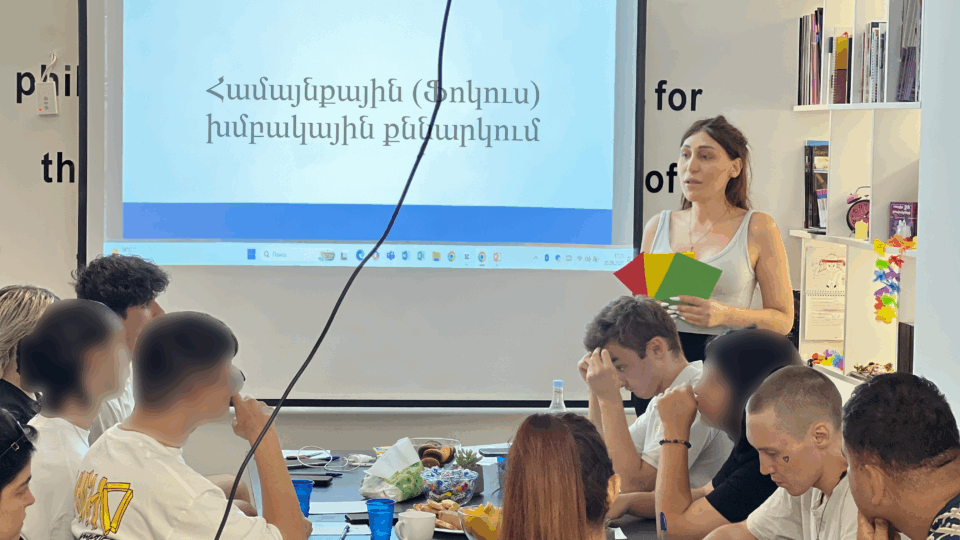

How have lived experiences of trans communities influenced policy changes?
GATE provides financial assistance to trans and gender diverse-led organizations for writing reports for submission to UN mechanisms. This supports data gathering, key informant interviews and consultant fees for report writing. The primary focus of the reports is to provide specific policy recommendations to improve the human rights situation of trans and gender diverse communities. Find out more about GATE’s Membership Grants.
In 2025, the National Trans Coalition (NTC), an Armenian trans human rights organization, received a grant to deliver a joint submission in partnership with Right Side NGO, an Armenian trans and sex worker-led organization, to the UN Working Group on Discrimination against Women and Girls.
How does the National Trans Coalition work?
National Trans Coalition operates through an intersectional and community-driven approach, with board members and partners from various trans subgroups and those facing multiple forms of marginalization, including trans sex workers, migrants, youth, and religious minorities. NTC’s work includes capacity building, legal advocacy, improving access to gender-sensitive healthcare, and providing emergency support for trans people in Armenia.

What were the issues?
Before the activity, trans and gender diverse people in Armenia faced a highly restrictive and stigmatizing environment. There is no comprehensive legal gender recognition framework, limited anti-discrimination protections, and widespread stigma in healthcare, employment, and public life. Many trans people—especially those who are also sex workers, migrants, youth, or from religious minorities—experience multiple and intersecting forms of marginalization. Access to gender-affirming and HIV-sensitive healthcare remains inconsistent, and trust in institutions is low due to past discrimination and breaches of confidentiality. Community spaces are limited, and safety concerns often prevent open participation.
What challenges were faced?
The activity aimed to address these gaps by strengthening community voice, improving access to accurate information and services, and building trust and capacity among trans communities and stakeholders.
During implementation, key challenges included difficulty reaching the most marginalized trans individuals due to safety concerns, stigma, and fear of exposure; limited engagement from some institutional stakeholders; and digital security concerns when using online platforms. These were addressed by working through trusted peer networks, ensuring anonymity and confidentiality (e.g., secure communication channels), adapting outreach strategies, and maintaining a flexible, community-led approach that prioritizes safety and trust-building.
How lived experiences shaped policy?
GATE funding enabled National Trans Coalition and Right Side NGO to conduct a comprehensive desk review, analyzing national legal frameworks and previous UN recommendations, with a focus on gaps in legal gender recognition, access to gender-affirming healthcare, and protection from discrimination and violence. This was complemented by:
- individual and group consultations in Yerevan with 24 trans women and gender diverse individuals,
- an online survey with 86 trans women and gender diverse respondents, and
- online or face-to-face interviews with 12 key stakeholders, including health experts, decision-makers, legal experts, psychologists, and human rights defenders, to identify existing barriers.
The collected data was analyzed, and the report was submitted to the UN Working Group on Discrimination Against Women and Girls in advance of their country visit.
How was GATE support essential?
GATE support enabled trans and gender diverse people in Armenia to actively participate as experts, ensuring that their lived experiences shaped the data and advocacy outcomes. This not only strengthened the quality and credibility of the report but also increased community confidence and visibility at national and international levels. The support also helped create safer and more structured spaces for community consultation and knowledge production.
In particular, GATE’s tools and guidance on community-led research methodologies, documentation, and advocacy framing were highly valuable. These resources supported ethical data collection, strengthened the advocacy narrative, and ensured alignment with global human rights standards.
Overall, GATE’s involvement contributed to building sustainable advocacy capacity and fostering stronger collaboration among trans-led organizations.
With GATE’s support, we transformed over 100 lived experiences into policy influence, proving that when trans people speak, systems must listen. Our shadow report is not just research, it’s a roadmap for justice and accountability. – Camelia Kandiliani, Executive Director of NTC.
What do trans communities need?
The submission urges the Armenian government to establish a transparent legal framework for gender recognition based on self-determination, removing all medical prerequisites such as surgery or hormone therapy. It calls for the adoption of comprehensive anti-discrimination legislation and amendments to the Criminal Code to explicitly protect gender identity and sexual orientation, alongside ratifying the Istanbul Convention and creating a dedicated State body to address discrimination complaints.
Additionally, the report recommends funding trans-competent healthcare services, including gender-affirming surgeries and hormonal therapy, while adopting ICD-11 standards to eliminate the pathologization of trans identities. Finally, it emphasizes the importance of public awareness campaigns and specialized training for law enforcement and the judiciary to effectively combat hate crimes and societal stereotypes.
How can you use this case study?
This project empowered trans and gender diverse people in Armenia by positioning them as experts throughout the process.
For many participants, it was the first time they had been invited to share their experiences and knowledge in a space like this, where their voices were documented to influence national and UN-level advocacy.
In the course of their research, NTC and Right Side NGO learned that centering trans voices as experts with lived experience in data collection is critical and more impactful. They witnessed that collaborating with another trans-led organization in the country strengthens advocacy.
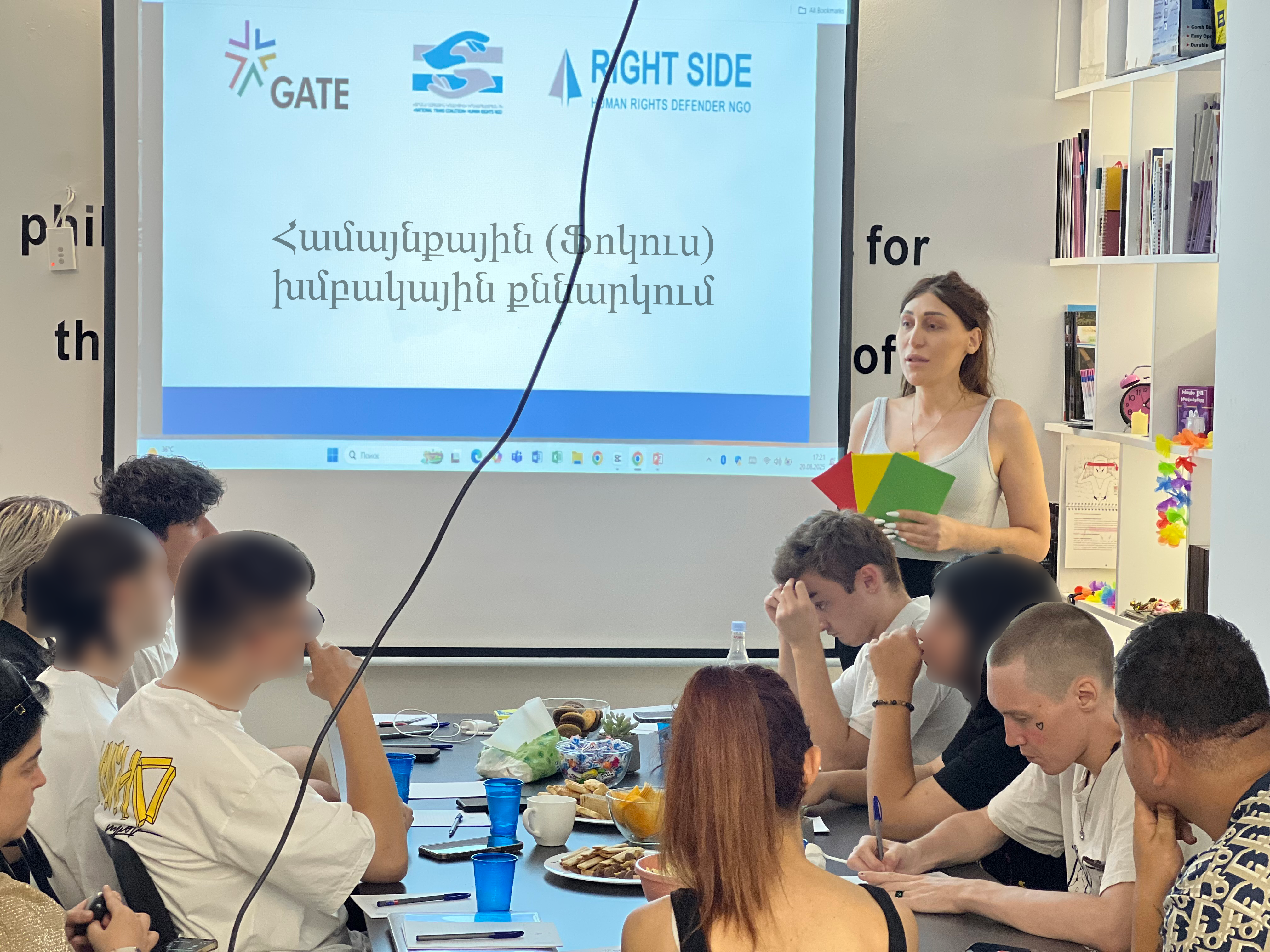
While direct high-level meetings with government officials were difficult to secure, advocacy efforts were more successful within international and multilateral spaces.
For example, during the visit of the UN Working Group on Discrimination against Women and Girls to Armenia (March 16–25), NTC and partners were able to engage through a civil society consultation at the UN House. In this space, community-led evidence and recommendations from the joint report were presented, emphasizing the inclusion of trans and gender diverse people in gender equality efforts. As a result, several of these recommendations were reflected in the Working Group’s official statement, demonstrating the value of strategic engagement with UN mechanisms even when national-level access is constrained. The final country report is expected in June 2027, offering a continued advocacy entry point.
Another important lesson is the need to diversify advocacy targets: when national-level engagement is limited, international mechanisms can serve as effective leverage points for visibility and pressure.
Finally, the process highlighted that sustainable advocacy requires long-term engagement. Initial outcomes, such as inclusion in UN statements, should be seen as stepping stones toward broader structural change, requiring continued follow-up, relationship-building, and strategic use of upcoming opportunities.
What will the future look like?
National Trans Coalition and partners plan to build on this work by using the report as a key advocacy tool at both national and international levels.
This includes continued engagement with UN mechanisms such as the UN Working Group on Discrimination against Women and Girls, particularly in follow-up to the upcoming 2027 country report, as well as leveraging other human rights platforms.
At the national level, the report will support ongoing lobbying efforts with government stakeholders, even if gradual, by providing evidence-based recommendations and community-led data. NTC also plans to organize further community consultations to update findings, ensure continued representation of diverse trans voices, and strengthen community ownership.
In addition, collaboration with trans-led and allied organizations will be expanded to reinforce joint advocacy, while maintaining a focus on positioning trans and gender diverse people as experts in future research and policy processes.