



Alliance for Dynamics Initiative (ADI) is a trans-led organization serving trans and gender diverse communities in Ghana. ADI envisions a country where our communities enjoy equal rights, live free from stigma and discrimination, and are fully recognized as human beings.
What is ADI doing for trans and gender diverse communities?
ADI’s work sits at the intersection of health, safety, community empowerment, and human rights. Since its founding in 2017, the organization has worked to address stigma, discrimination, violence, extortion, and blackmail against trans people in Ghana through education, empowerment, improved access to healthcare, and human rights advocacy.
Over the past years, their work has taken several concrete forms. The organization has:
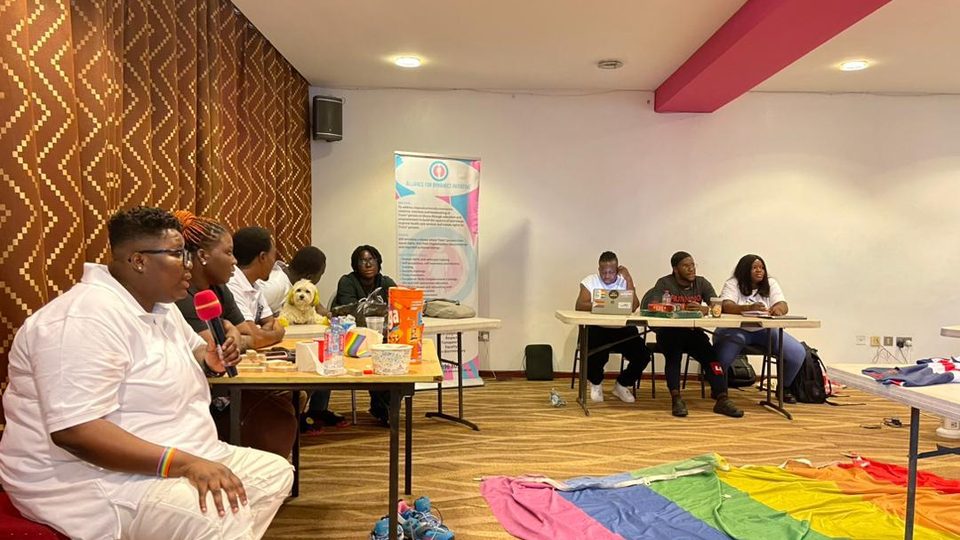
- provided human rights and advocacy training, self-acceptance and identity workshops, security training, vocational empowerment workshops, and HIV/AIDS prevention education.
- engaged institutions that shape the daily safety and access of trans people, including the Ghana Police Service, the Commission on Human Rights and Administrative Justice, and the Ghana Health Service, working to address abuses, stigma, discrimination, and extortion in health facilities and workplaces.
- trained State actors to identify more responsive officers who can serve as contact persons within State institutions.
- contributed to community-led knowledge production and documentation: they were one of the organizations involved in Our Voices, a participatory action research initiative mapping the needs of LBQ women and trans people in Ghana and other Anglophone West African countries.
- supported international human rights documentation on the impact of criminalization, arbitrary arrest, and detention on LGBT people in Ghana.
Together, these efforts show a consistent thread in ADI’s work: building community power while ensuring that the realities of trans people in Ghana are documented, understood, and brought into advocacy spaces.
Trans In Number: counting to advocate!
One of ADI’s most significant recent achievements is the continued implementation of the “Trans In Number” (TIN) project through GATE’s Power in Q Data initiative. The project involved three phases. The first step was to review existing data on trans communities in Ghana, and supplement these findings by surveying Ghanaian trans people on their experiences and needs regarding health, socio-economic conditions, livelihoods, human rights, stigma and discrimination, and the legal and policy environment. This research identified important gaps in the data on trans communities.
Following on from this, ADI developed community-centered messaging and advocacy briefs that were used to share the research findings with key stakeholders to better understand the issues affecting trans and gender diverse people in Ghana. These are being used to support program development, develop effective advocacy messages, push for resource mobilization, and provide evidence for much-needed community-focused interventions.
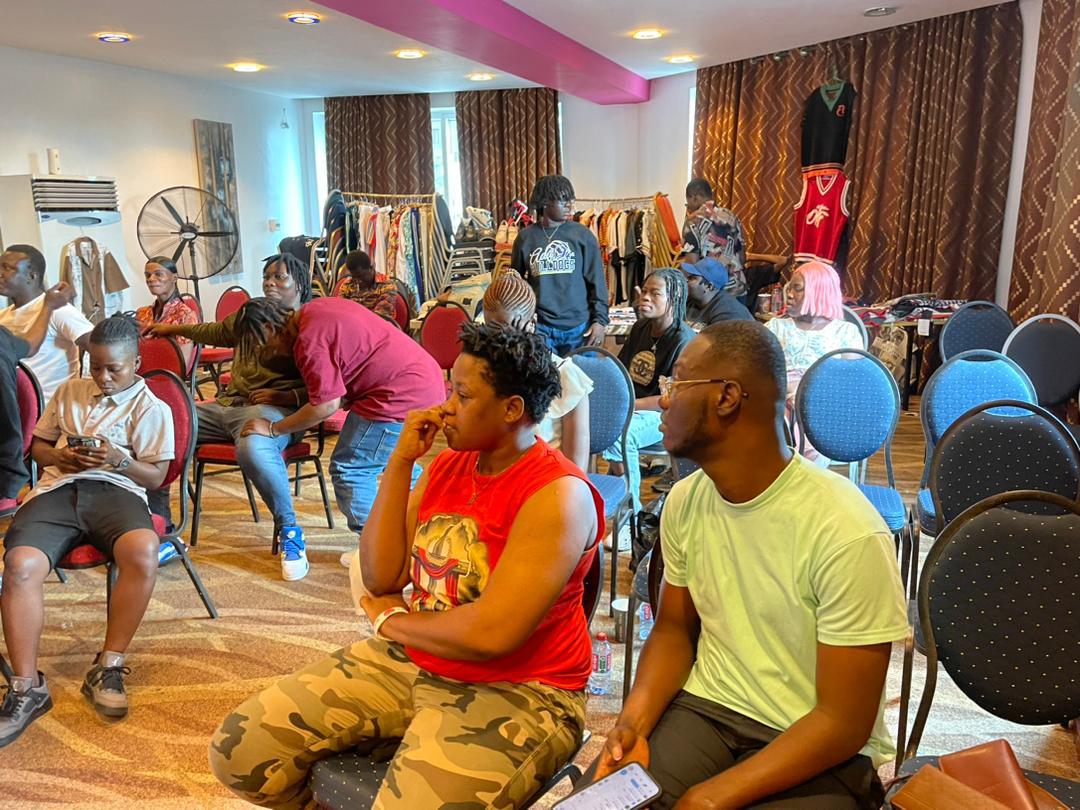
In parallel, ADI offers direct support to trans people, strengthening their community engagement and providing information and support, including economic empowerment and access to safe housing. This builds on ADI’s TransHealth Initiative, which supported more than 120 trans people by providing critical information, referrals to health care, and ongoing support related to their health and well-being. This included community health screenings to identify key health risks. Participants’ responses were positive, with many sharing that ADI, as a trans-led organization, provided one of the few opportunities to access health information and support in an environment where they felt understood, respected, and safe.
Together, these achievements highlight how ADI meets immediate community needs through support, referrals, shelter, and health information, while also strengthening the evidence base needed for longer-term advocacy, funding, and program development.
“Every person deserves to live with dignity” – From ADI’s Leadership
Why is this important?
ADI’s work has become even more urgent as Ghana’s legal and political environment becomes increasingly dangerous for LGBTQI+ people. Ghana already has a law criminalizing homosexuality, and the introduction and subsequent approval of the Anti-LGBTQ Bill by Parliament have intensified fear, misinformation, and disinformation in the public space, especially in the media.
Recent legal developments have heightened these concerns. The Human Sexual Rights and Family Values Bill was passed by Parliament in May 2026. Even before coming into law, the bill had contributed to a hostile public climate. Human rights organizations have warned that the bill further criminalizes LGBTQI+ identity, expression, advocacy, support, funding, and, in some interpretations, gender-affirming care.
For trans and gender diverse communities, this means that everyday visibility can bring risk, with access to health care, housing, employment, community organizing, and service delivery becoming harder. ADI has already experienced the repercussions of this Bill, with its offices and some staff members’ homes becoming safe houses for trans people in need, exposing them to security risks, including multiple break-ins.
In this context, ADI’s work on safe access to services, community trust, evidence generation, and advocacy is critical. As risks increase, ADI continues to prioritize community trust and remains committed to safe engagement with community members, relying on trusted platforms and preexisting relationships to ensure people can access support without risking exposure.
How is GATE supporting?
Through Power in Q Data, GATE’s support has helped ADI strengthen its organizational resilience. Alongside financial support, ADI received capacity-building support to strengthen the leadership’s strategic approach to fundraising and resource diversification, as well as practical skills in identifying opportunities and preparing grant proposals. This support helped them think more strategically about diversifying funding, approaching new donors, and sustaining both direct support and advocacy in a context where funding remains limited, community needs are increasing, and public hostility is rising.
What will the future look like?
Over the next 3 years, ADI’s priorities will focus on strengthening access to trans-inclusive healthcare, including HIV, sexual and reproductive health and rights services, and mental health support. The organization also aims to expand safe spaces, psychosocial support, and economic empowerment, while intensifying rights-based advocacy and public education to counter stigma. There are also plans to digitalize and strengthen its institutional systems to improve reach, safety, and sustainability. This is critical in a context where both physical and digital security matter for community organizing.
How can you support or partner with ADI?
ADI is calling for collaboration, partnership, and flexible multi-year funding to support community-led programming, organizational strengthening, sustainability, and research. Civil society organizations and allies can support by strengthening referral networks and sharing expertise. Healthcare institutions and professionals can work with ADI to improve access to respectful, confidential, and non-discriminatory services for trans community members.