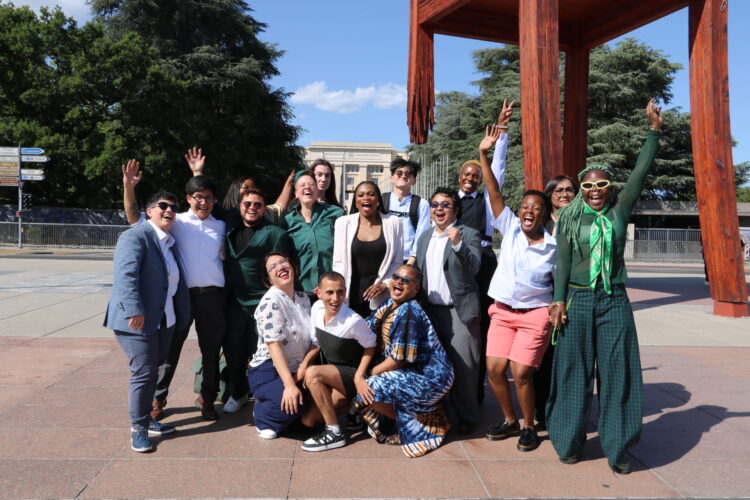

At a moment when trans people have never been more visible, it’s hard to remember a time when we were not front and center of the global psyche. But in 2017, when the first Trans Advocacy Week was held, this was the case.
In 2016, the UN Human Rights Council passed a historic vote to establish the mandate of the Independent Expert on sexual orientation and gender identity.
For the first time at the UN, LGBT people would have an expert specifically focusing on protecting their rights. The Independent Expert on sexual orientation and gender identity (IE SOGI) mandate specifying and separating sexual orientation from gender identity was a key moment for pushing forward awareness and knowledge of trans and gender diverse communities. Prior to this mandate, advocacy was focused on engaging with friendly UN experts working on issues connected to, but not directly serving, trans rights.
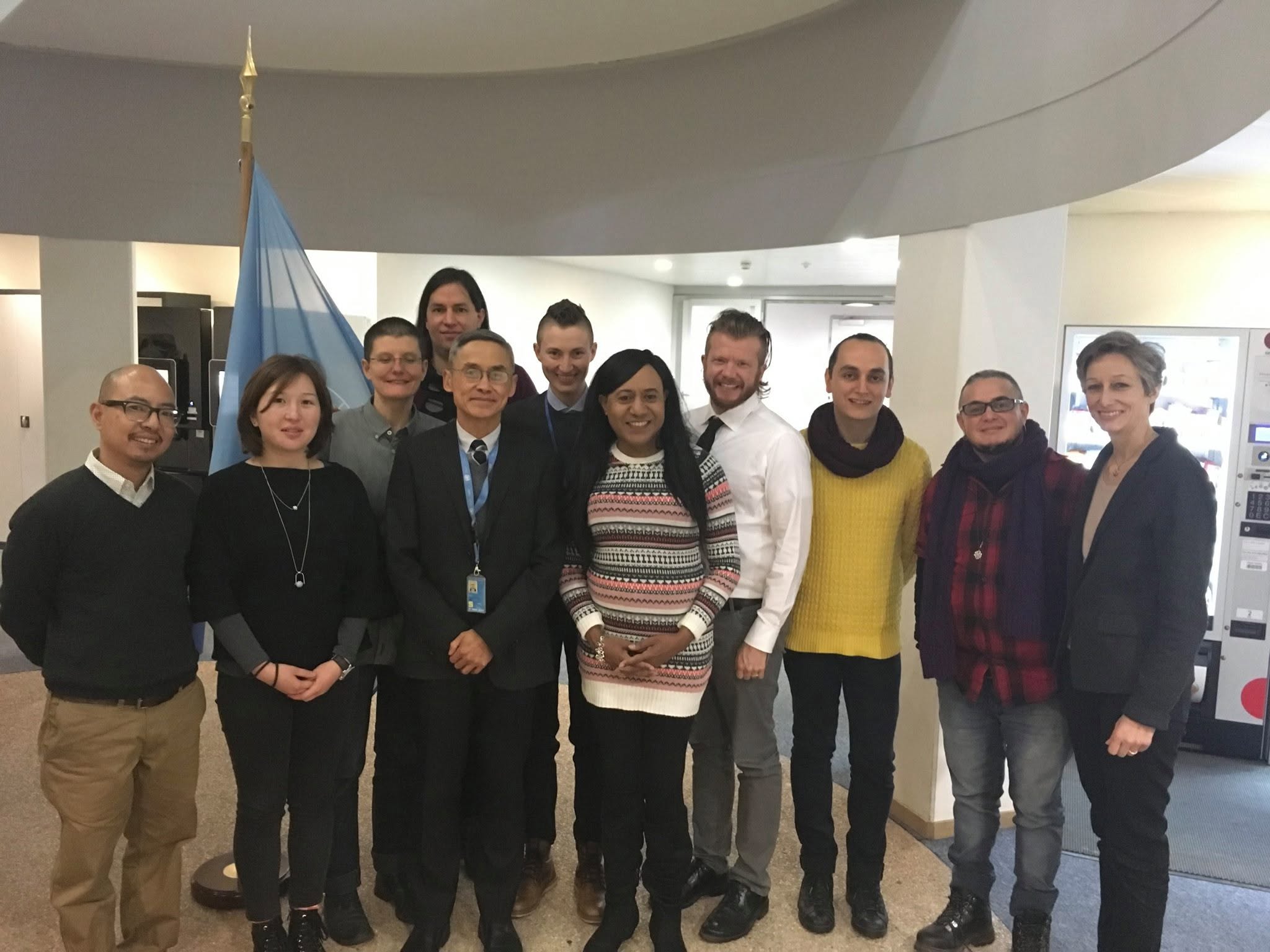
In January 2017, the IE SOGI held the first public consultation with States, UN bodies and stakeholders to support the development of the mandate’s scope of work, priorities and strategies. To sustain momentum and continue to raise awareness of the issues facing trans communities, GATE, APTN, TGEU, ILGA World, and RFSL joined together to organize the first-ever Trans Advocacy Week.
Held in 2017 during the 35th session of the Human Rights Council at the UN in Geneva, this first edition of Trans Advocacy Week brought together 16 trans and gender diverse activists from across the world. At the time, the issues facing trans communities were constantly being subsumed and lost in wider LGBT issues. By providing the opportunity for trans and gender diverse activists to raise their voices at the UN, the lived experience took precedent over facts and figures and put faces and names to the issues being discussed.
Trans Advocacy Week, however, does not only provide the opportunity to advocate. It is a critical learning and development space for trans people to develop into leaders of the movement.
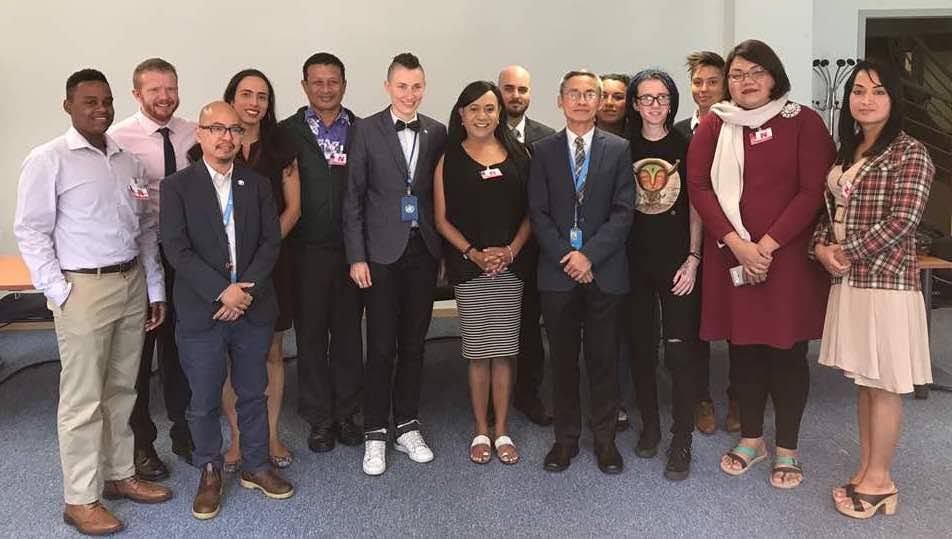
Some of those present in 2017 have since gone on to become prominent leaders at global trans organizations, including Ricky Nathanson, Senior Advisor at the Global Trans Program for OutRight Action International, Viviane Vergueiro, Deputy Director of the International Trans Fund, Ymania Brown, former Executive Director of TGEU, who sadly passed away unexpectedly in 2025, and our very own Erika Castellanos, Executive Director of GATE.
“Trans Advocacy Week was one of the highlights of my life. I attended in 2016, and I was so excited to be at the UN Human Rights Council for the first time and to meet so many other trans activists from around the world. I packed my bags with a knot of nervousness in my stomach! At the UN Geneva, I strengthened my understanding of the rights of our community. The very next year, I joined GATE as Director of Programs, and well, the rest is history!
Erika Castellanos, Executive Director of GATE
Since then, Trans Advocacy Week has been held annually during the first weeks of the June UN Human Rights Council in Geneva. Over that time, we have seen a shift in not only awareness of trans people but also significant global backlash against trans communities, particularly at the government level, with wide-reaching consequences. During COVID, this became a virtual event, with the issues being brought heightened by the pandemic that had such a devastating impact on our communities, many of whom were unable to access support or healthcare in their countries due to discrimination.
2023 was a particularly significant year, as both GATE and APTN became the first trans-led organizations ever to receive ECOSOC status at the UN.
The coordination of Trans Advocacy Week was also expanded to include EATHAN, thus amplifying the representation of trans and gender diverse activists from Eastern Africa. The continuation of the IE SOGI mandate has also been an essential advocacy focus to ensure that trans and gender diverse issues remain explicitly included at the UN. The mandate must be renewed every three years by a vote of the UN Member States, which passed successfully in 2019, 2022 and 2025.
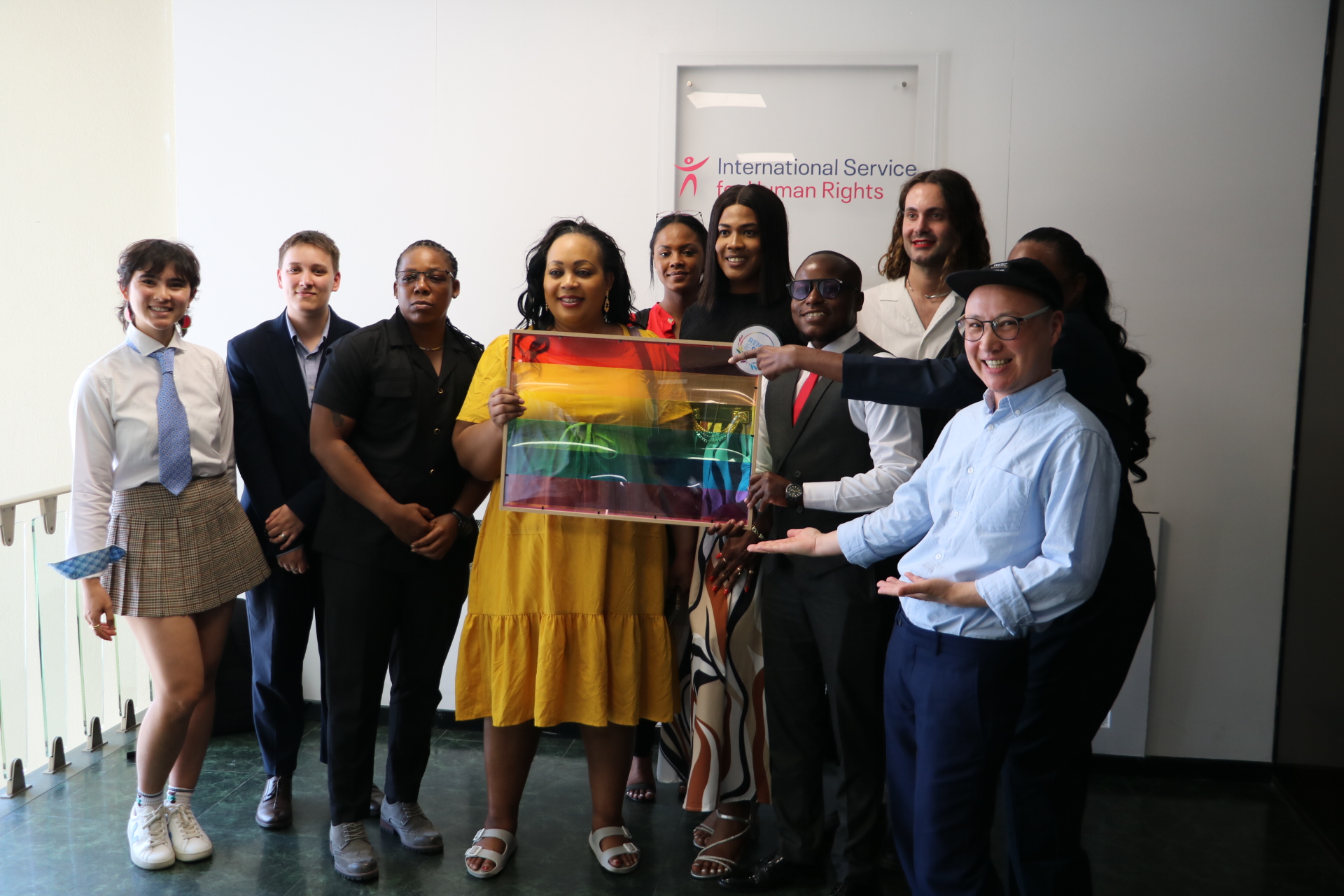
This year was the 10th anniversary of Trans Advocacy Week, with 18 delegates attending the first week of the 62nd UN Human Rights Council in Geneva from 15-19 June 2026. This year, we hosted the largest group of delegates so far, with support from 12 staff on the ground, demonstrating the sheer amount of people power and resources it takes to support the complex coordination of this event. Over the past 10 years, we have developed important relationships with Member State representatives, Special Rapporteurs, and other global and UN bodies such as the WHO, the Global Fund and UNAIDS. The coordination of meetings, side events, interventions and networking events requires significant effort by the organizers to ensure that our delegates get the most out of these advocacy opportunities in Geneva.
In an increasingly polarized and dangerous world for trans and gender diverse people, the significance of having trans voices at the UN cannot be understated.
This year resulted in increased cross-movement collaboration at the UN, highlighting how democratic backsliding is impacting everyone. Significantly, during the opening session of the Human Rights Council, the UN High Commissioner for Human Rights, Volker Türk, explicitly referenced the global coordinated strategy of repression, which he called the “authoritarian playbook”, that includes attacks on civil society, censorship and disinformation, criminalization of identities and the dismantling of democratic safeguards.
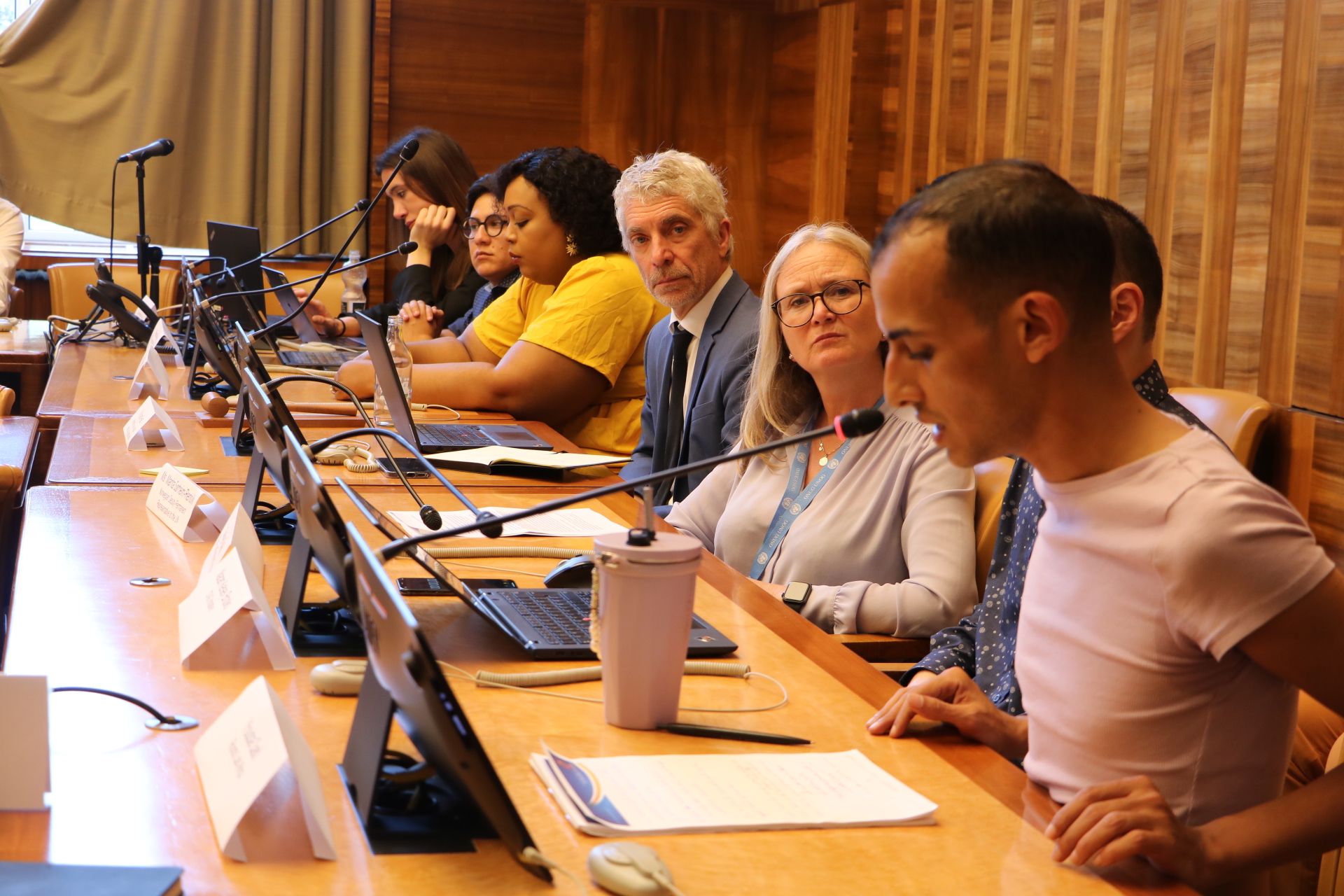
It was on this topic of democratic backsliding that we focused our side event, through the lens of attacks on freedoms of expression, association and assembly. Cosponsored by the Permanent Missions of Norway, Mexico, and Ireland, the opening remarks were provided by Ms. Marita Sørheim-Rensvik, the Norwegian Deputy Permanent Representative to the UN, with the discussion moderated by Mr. Graeme Reid, the Independent Expert on sexual orientation and gender identity (IE SOGI). Interventions from Trans Advocacy Week delegates and staff focused on the impact of attacks on civil society in EECA, Africa and SWANA regions, with the discussion revolving around the UN’s role in providing solutions. Representatives from 18 countries across all regions of the world attended, demonstrating the increasing importance of Trans Advocacy Week at the UN.
There are still many challenges ahead of us. Trans and gender diverse communities are under increasing attack from governments and influential individuals with wide-reaching consequences. With Trans Advocacy Week being the only UN-level opportunity provided solely for trans and gender diverse activists, it’s more important now than ever that our communities are given this opportunity to raise their voices and highlight critical issues facing them around the globe.