
Did you know that a discussion at the United Nations headquarters in New York in March 2026 nearly redefined the meaning of “gender” for the entire world, potentially removing trans and gender diverse people from the global gender equality framework?
What is the CSW and why should you care?
The Commission on the Status of Women (CSW) is the UN’s primary body for gender equality, meeting annually in New York to produce policy recommendations for Member States in economic, political, civil and social spheres. It consists of 45 Member States elected by the 54 Member States of the UN Economic and Social Council (ECOSOC) for a four-year term. Since its establishment, the CSW has played a vital role in shaping global policies on gender equality, including contributing to landmark documents such as the Beijing Declaration and Platform for Action in 1995.
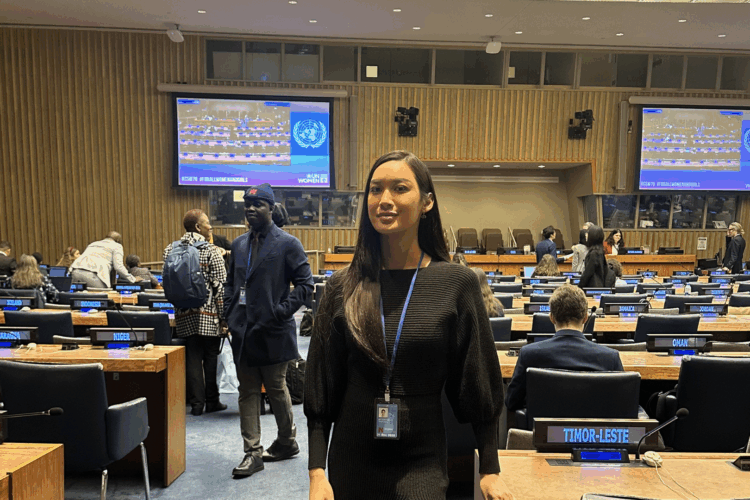
The commission convenes annually in March at the UN in New York for a two-week session gathering government officials, UN agencies, civil society groups and NGOs. This year was the 70th session of the Commission on the Status of Women (CSW70), held from 9 – 19 March 2026, with the priority theme of ensuring and strengthening access to justice for all women and girls. This includes promoting inclusive and equitable legal systems, eliminating discriminatory laws, policies and practices, and addressing structural barriers.
What happened at CSW70?
At CSW, the “Agreed Conclusions” are the main negotiated outcome documents adopted annually, offering a clear analysis of the priority theme and providing specific policy recommendations for UN Member States and stakeholders. This year, the United States proposed 8 amendments to the document that were designed to narrow the document’s scope and remove trans and gender diverse people from global gender equality frameworks.
Their argument was that it contained “ambiguous language promoting gender ideology” and references to sexual and reproductive health that could “imply abortion rights”.
On the first day of CSW70, the Agreed Conclusions (E/CN.6/2026/L.2) were adopted, with all 8 U.S. amendments rejected — a watershed moment, as the adopted text retains critical language on diversity and intersecting forms of discrimination, one of the few explicit entry points for trans and gender diverse people within UN gender equality frameworks. This passed by recorded vote rather than consensus: 37 in favor, 1 against, with 6 abstentions. Watch the full Agreed Conclusions vote and adoption.
However, the fight did not end there.
On the final day of CSW70, the United States introduced a last-minute draft resolution seeking to retroactively redefine “gender” based on Annex IV of the Beijing Declaration, which refers only to “men” and “women.” This move was widely condemned by feminist civil society and Member States as a misinterpretation of the Beijing Platform for Action.
As part of the LBTI Caucus, GATE acted quickly, communicating with our members and allied organizations to oppose the resolutions. Belgium, on behalf of 26 EU Member States, successfully moved a no-action motion — blocking the resolution before a vote, and marking the second major defeat for the U.S. administration’s effort to export its domestic anti-gender agenda into multilateral spaces. Watch the last session of CSW70.
Why does protecting the definition of gender matter?
What happened at CSW70 has implications that extend far beyond a single conference room. By protecting the definition of gender, these outcomes will shape how gender is understood across the UN system and influence Member States’ national commitments. For GATE and the trans and gender diverse communities we represent, CSW was a vital advocacy moment to uphold inclusive global gender equality and women’s empowerment frameworks, ensuring that our communities do not get left behind.
Are trans rights and feminism united?
Our victories matter, but they don’t tell the whole story.
GATE’s presence at CSW70 demonstrates that trans rights and feminist advocacy are strongest when they act together. An attack on the inclusion of trans and gender diverse people within gender equality is an attack on the principle that all people, regardless of gender identity, deserve equal protection under international law.
However, not all actors within feminist spaces are allies to trans and gender diverse communities — and CSW70 made this painfully clear. During the opening of CSW70, the UN Special Rapporteur on violence against women and girls, Reem Alsalem, was among the opening speakers. She has consistently used her mandate to undermine trans rights, sex worker rights, and rights to surrogacy, and has launched smear campaigns against feminist and trans-led organizations, including GATE and our Executive Director. At CSW70, she was given a platform alongside anti-gender organizations, and her framing was echoed across parallel events featuring ‘feminist-proclaimed’ speakers hostile to trans and intersex inclusion.
Across the event, LBTI activists reported direct harassment from anti-gender participants, highlighting the horrific normalization of this rhetoric within feminist and multilateral spaces. These dynamics raise a fundamental question: are trans rights and feminism two separate struggles running in parallel? Or are they deeply interconnected — inseparable threads of the same movement for bodily autonomy, dignity, and self-determination?
How did GATE engage at CSW70?
GATE’s advocacy at CSW70 in official sessions, parallel events and bilateral meetings explicitly linked attacks on trans rights to the rollback of sexual and reproductive health and rights and women’s bodily autonomy, reframing trans inclusion as essential to the strength of the broader feminist coalition, not a separate agenda. This included a formal statement delivered during the official Interactive Dialogue with Youth Representatives on 16 March, bringing trans voices directly into one of the UN’s most prominent gender equality forums. We also co-hosted a parallel event on LBTI Bodily Autonomy and Justice where the venue was filled beyond capacity — a strong reflection of the deep demand among CSW delegates, Member State representatives, and civil society for meaningful engagement on LBTI justice issues.
However, direct advocacy is only part of the picture. Behind the scenes, the relationships built during bilateral meetings and shared meals sustain cross-movement collaborations. We participated in a bilateral meeting with Luxembourg’s delegation, presenting concrete recommendations on systematically monitoring anti-gender actors operating within multilateral spaces and emphasizing the urgency of safeguarding dedicated mandates on gender equality and bodily autonomy. We also met with key partners and allies, including Arcus Foundation, Foundation for a Just Society (FJS), American Jewish World Service (AJWS), and MenEngage Alliance. With many of our Board, staff and GATE members present at CSW70, we also hosted strategic dinners, supporting the gathering of activists from Armenia, France, Kenya, Sri Lanka, Uganda and the US. These conversations are not peripheral to the work — they are the work, sustaining collaboration across continents, grounding funders in community realities, and building the trust necessary for long-term movement solidarity.
What’s next for gender equality and trans rights at the UN?
As the UN Secretary-General stressed during CSW70, gender equality:
“is and always has been a question of power.”
The U.S. efforts at CSW70 are part of a coordinated, transnational campaign and are not taking place in isolation. When a Special Rapporteur excludes trans women from the definition of womanhood, when anti-gender groups occupy feminist spaces, and when LBTI activists face hostility within the gender equality movement, this demonstrates a pattern of wider discrimination within the UN system. As part of the international community, we must sustain our momentum to protect the hard-won inclusive language and inclusive multilateralism that we have spent two decades building.
The upcoming High-Level Meeting on HIV and AIDS (HLM) hosted by the UN General Assembly (UNGA) in June 2026 is a critical five-year review that will establish a new Political Declaration guided by the Global AIDS Strategy 2026-2031. This will likely represent the last dedicated global checkpoint on HIV before the 2030 goal to end AIDS as a public health threat and will determine what gets funded, what gets measured, who is protected, and whose knowledge is valued. GATE will engage this process as another front in the same fight: ensuring that political commitments to trans communities translate into funded services, community-led data, and enforceable protections on the ground.
Looking further ahead, the High-Level Political Forum (HLPF) in July 2026 serves as the UN’s main platform for evaluating progress on the Sustainable Development Goals (SDGs). In line with the 2030 Agenda for Sustainable Development’s Leave No One Behind promise, we must continue to stress that “sustainable development cannot be achieved without trans and gender diverse persons.” We must keep engaging with and urging Member States to maintain and uphold the inclusion of our communities in SDG implementation.
GATE has been strengthening our community’s advocacy capacity for the SDGs and the HLPF process, and we will be releasing an updated guide to the SDGs later this month. The lessons learned from engaging at the 2025 HLPF have been incorporated, with the aim of providing a ‘how to’ for influencing national and global decisions within the SDG framework. This ranges from participating in Voluntary National Reviews (VNRs) and engaging with regional SDG forums to advocating directly at the HLPF and connecting local realities to global targets.
Across the UN, the pattern is consistent: when inclusive multilateral spaces are weakened, it is not only trans people who lose — the entire framework of gender equality, HIV response, human rights, or sustainable development is diminished. The world said no, twice, to erasing trans people from global policy. GATE will keep building the coalitions, holding Member States accountable, and bringing trans-led expertise into every space where our futures are decided.