


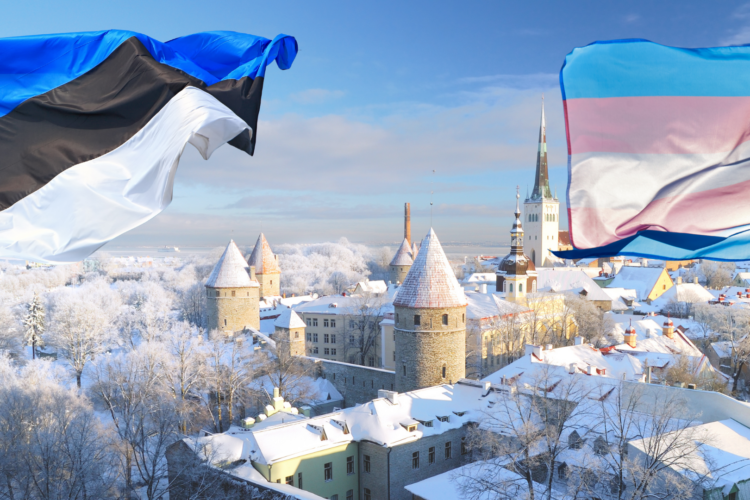

Estonian Trans Alliance (ETA) is the only trans community-led NGO in Estonia. Collectively with GATE’s technical support and the Estonian trans and gender diverse community, this submission reflects the insights, experiences, and recommendations gathered from a diverse range of trans and gender diverse voices and perspectives in Estonia.
The submission is critical to:
- Raises awareness: as it highlights systemic discrimination and legal gaps affecting trans people in Estonia.
- Influence policy change: as it calls for urgent reforms in healthcare, employment, and legal protections.
- Empower the trans community: as it strengthens advocacy efforts by providing concrete recommendations based on real experiences.
By bringing these issues to the international level, it pushes Estonia to uphold human rights standards, ensuring a more inclusive and equitable society for trans and gender diverse individuals.
Background
In Estonia, since 1999, when legal gender recognition procedures were enacted by the Social Minister’s decree, the state has made no progress in improving access to legal gender recognition and gender-affirming care. There are no laws governing and protecting trans and gender diverse people’s rights to legal gender recognition and the process to actually have legal recognition of one’s affirmed gender is quite complex and takes a minimum of 5 years.
Below you find some of the key challenges trans and gender diverse people face in Estonia:
1. Access to Healthcare
- Lengthy bureaucratic processes: obtaining hormone replacement therapy and other gender-affirming treatments involves long waiting times and complicated procedures.
- Language barriers: Russian-speaking individuals experience even greater difficulty due to a lack of trans-competent, inclusive providers.
- Discriminatory attitudes: healthcare providers often display a lack of understanding of transgender experiences, leading to miscommunication, inadequate care, and harmful stereotypes.
2. Workplace Discrimination
- Hostile environments: trans and gender diverse employees frequently face harassment, misgendering, and resistance to neutral pronoun use.
- Dress codes and policies: gendered dress codes prevent individuals from expressing their gender identity comfortably.
- Legal support: limited access to legal recourse for workplace discrimination leads to underreporting and unresolved cases.
3. Employment Barriers
- Complicated legal document changes: difficulty updating gender markers in official documents constitutes a barrier to access the job market.
- Binary norms and societal pressure: trans and gender diverse individuals face anxiety and discrimination when entering the workforce.
4. Legal Protections
- Ineffective legal system: Police and legal systems often fail to adequately address hate crimes and discrimination.
- Barriers to reporting: skepticism about the effectiveness of reporting mechanisms leads to underreporting.
5. Community Support
- Reliance on peer networks: community support systems operate informally, with minimal government assistance.
- Funding gaps for NGOs: organizations providing vital services struggle with limited financial support.
Key Recommendations
Healthcare
- Simplify and expedite access to trans-specific healthcare services, including gender-affirming treatments.
- Shift legal gender recognition to a self-determination model, removing dependence on medical diagnoses.
- Develop comprehensive training programs for healthcare providers to enhance cultural competency and trans-awareness.
- Implement anti-discrimination policies in healthcare settings, ensuring respectful and affirming treatment.
Workplace Discrimination
- Create and enforce anti-discrimination guidelines covering gender-neutral dress codes, pronoun use, and respectful workplace practices.
- Partner with LGBTQI+ organizations to develop policies that reflect trans and gender diverse individuals’ experiences and needs.
- Enhance data collection on workplace discrimination to inform policy and track progress.
Employment
- Enable legal gender recognition based on self-determination.
- Promote inclusive hiring practices and gender-neutral job descriptions.
- Strengthen enforcement of anti-discrimination laws with robust monitoring and sanctions for non-compliance.
Legal Protections
- Update hate speech and hate crime laws to explicitly protect gender identity and expression.
- Introduce mandatory trans and gender diverse awareness training for law enforcement.
- Establish accessible reporting mechanisms for discrimination and hate crimes.
Community Support
- Develop and disseminate clear, comprehensive guidance on trans and gender diverse resources and rights.
- Increase government funding for NGOs providing critical support to transgender communities.
- Foster collaboration between government agencies and trans advocacy groups to improve support networks.
Read the complete submission to learn more about challenges and recommendations submited.