
On 31 October 2026, Global Action for Trans Equality (GATE), with support from ILGA World, submitted a report to the Call for inputs – Strategic Priorities and Vision-Setting of the Special Rapporteur on the promotion and protection of the right to freedom of opinion and expression, calling for greater attention to the cross-border activities of anti-rights actors.
Summary
This submission examines how transnational anti-rights networks use political influence, funding and advocacy to undermine human rights and democratic institutions across borders.
It calls for a dedicated thematic study examining how States can prevent and address these activities, strengthen accountability and protect human rights worldwide, without restricting legitimate human rights advocacy or funding.
What are the challenges?
Anti-rights actors frequently invoke freedom of expression as a shield for their harmful anti-rights advocacy.
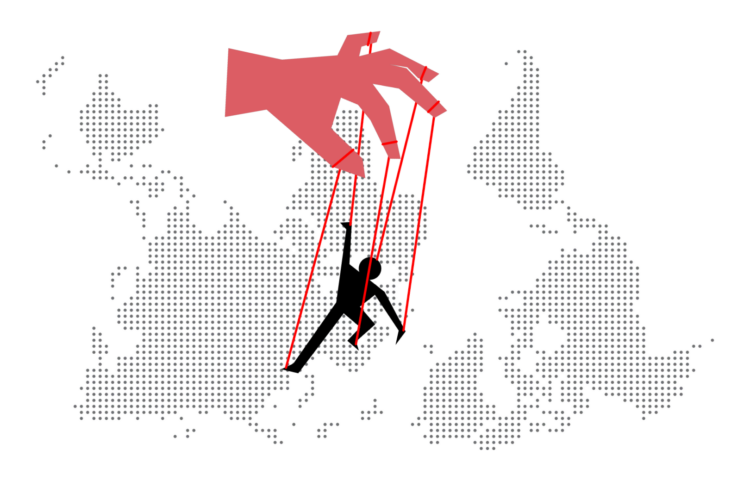
Particularly, actors based in the Global North are leveraging political and economic power to lobby for laws, policies and debates in other countries that contribute to the erosion of universally recognized human rights, driving violence, discrimination, and oppression against marginalized communities. Through lobbying, strategic litigation, political pressure, funding and communications, these actors help advance agendas that restrict fundamental rights and undermine democratic institutions.
While UN experts have documented anti-gender backlash, they have not considered whether States must regulate non-State actors within their jurisdictions whose cross-border activities foment human rights violations abroad. While international human rights mechanisms have addressed aspects of States’ responsibilities concerning the conduct of private actors, further examination is needed of how existing standards apply to transnational advocacy networks whose activities may contribute to discrimination, incitement to violence and restrictions on civic space abroad. This poses an important challenge:
how can States address the cross-border activities of anti-rights actors without restricting legitimate freedom of expression or using these measures to target human rights organizations and funding?
In particular, greater clarity is needed regarding the circumstances in which States may have positive obligations to prevent or respond to foreseeable human rights harms linked to such activities, while respecting the rights to freedom of expression, association and religion or belief. The Special Rapporteur on the promotion and protection of the right to freedom of opinion and expression is uniquely placed to address this challenge.
What is the impact on trans communities?
The gap mentioned before means transnational anti-rights campaigns slip through UN oversight: target-country governments can dismiss criticism as “interference in our culture,” while source-country governments may claim that actors have freedom of association and expression. Without guidance, no UN body currently advises or clarifies how international human rights law addresses transnational advocacy and communication activities that may contribute to discrimination, incitement to hostility or violence, and other human rights violations, while fully safeguarding freedom of expression and other fundamental freedoms.
Tens of millions of dollars are being spent to influence policies and legislation that threaten the rights and freedoms of trans communities worldwide.
Such foreign support used in lobbying for restrictive laws in other countries has contributed to human rights regression and democratic backsliding, including the criminalization of same-sex conduct and gender diversity, as well as restrictions on women’s and children’s rights.
For trans and gender diverse people, these developments can mean greater discrimination, reduced legal protections, increased hostility and fewer opportunities to participate freely in public life, undermining our ability to advocate for equality, challenge discrimination and exercise our fundamental rights. Increasingly coordinated efforts are using freedom of religion or belief to oppose gender equality, reproductive rights and the rights of LGBT+ persons.
Recommendations
A dedicated thematic study could help States understand how transnational networks use advocacy, strategic litigation, political pressure, funding and communications to fuel rights violations and democratic backsliding abroad and explore measures (e.g., laws, due diligence, diplomacy) to prevent them. The study should highlight best practices and legal options for States while safeguarding freedom of expression and considering the risk that such measures could be co-opted to target human rights funding, which is already under attack in the current political climate.
To do so, we recommend that the Special Rapporteur:
- integrate this under-explored dynamic into the mandate’s strategic framework and
- conduct a dedicated thematic study.
- establish clear guidance on State due diligence and extraterritorial responsibilities – while safeguarding legitimate human rights funding
- provide essential tools to counter anti-rights campaigns and defend universal human rights standards and democratic norms across all regions.
This could strengthen international recognition of the threat posed by transnational anti-rights networks, clarify State responsibilities and contribute to better protection of trans and gender diverse communities, human rights defenders and civil society organizations worldwide.