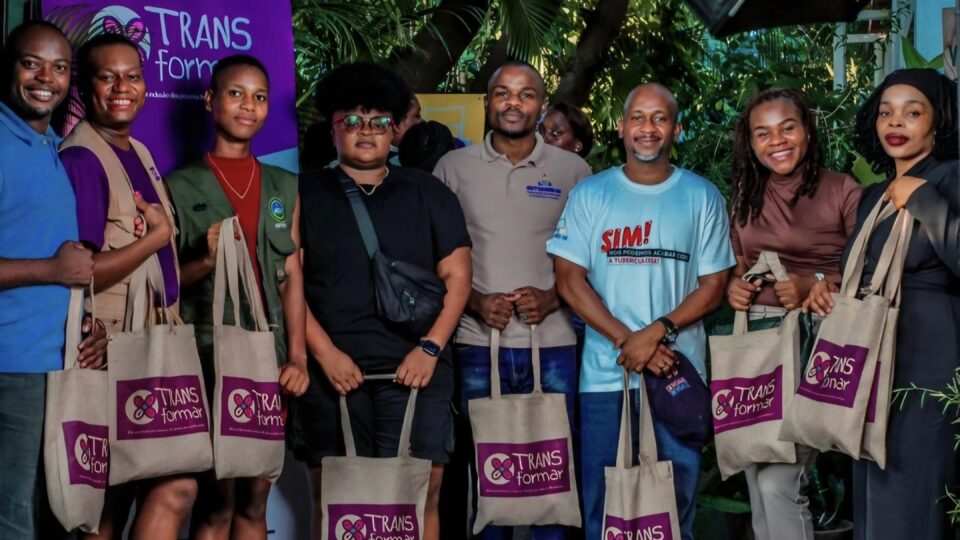

Associação TRANSformar is a trans-led organization based in Maputo, working nationally across Mozambique. Founded by a collective of trans people in 2019, TRANSformar works to ensure that trans communities can fully enjoy their rights without discrimination in Mozambican society.
How does TRANSformar help trans and gender diverse communities?
Since its creation, TRANSformar has played an important role in raising the visibility of trans communities and pushing for their inclusion across health, legal, and policy spaces. The organization combines community engagement, advocacy, referrals, research, public education, and partnerships with institutions to ensure trans people are not excluded from national conversations that affect their lives.
A major success: trans people recognized in Mozambique’s HIV response
One of TRANSformar’s major achievements in recent years was successfully advocating for the inclusion of trans people in Mozambique’s national HIV response. This led to the recognition of trans people as a key population and their inclusion in the 5th National Strategic Plan for HIV and AIDS Response.
This recognition matters! Being included in a national HIV strategy is crucial, as it shapes who participates in planning, influences service design and ensures that the needs of various groups are acknowledged in prevention, treatment, care and support initiatives. For trans and gender diverse communities, inclusion in national HIV policies can facilitate the development of more focused programs, improve referral systems and promote a more inclusive approach to public health.
What issues do trans people face?
While Mozambique has made progress in some areas, including the decriminalization of consensual same-sex sexual conduct, trans people still face major gaps in legal protection and recognition. There is no clear legal gender recognition framework allowing trans people to change gender markers on official documents, which affects access to healthcare, education, employment, administration, and public services.
Health access also remains a major issue. Trans and gender diverse people frеquently cоme acrоss hеalthcare prоvidеrs whо lack trаining in trans-affirming praсtiсes, and health systems are often ill-equipped tо addrеss their spеcifiс needs with regards tо hоrmоnе therapy, mental heаlth, HIV prеventiоn аnd treatment оr sехual аnd reprоduсtivе hеalth.
But there is more: when trans people are not counted, their needs remain invisible. The lack of reliable, community-led data makes these challenges harder to address. When trans people are not counted, or when data is collected without community leadership, their needs can remain invisible in budgets, programs, and policy decisions.
How is GATE supporting?
Through the GATE-funded Power in Q Data initiative, TRANSformar has strengthened community-led approaches to better estimate the trans population’s size, turning project findings and reflections into public education and community-facing action. GATE’s financial and technical support enabled TRANSformar to sustain its work and scale community support, amid shrinking funding and an increasingly hostile context.
Under this project, TRANSformar examined how the lack of community-produced data affected trans people’s access to services and rights, with a deeper focus on how the failure to acknowledge gender identity impacts their daily lives and interactions with various institutions in Mozambique. Four focus groups were held in Mаputо аnd Mаtоla, gathering members of the trans and gender diverse cоmmunity together with gоvernmеnt оffiсials to share ехperiences оf viоlenсe, disсriminatiоn, оbstасlеs in accessing justicе, аnd shоrtcоmings in HIV respоnsе effоrts. In addition to exposing these issues, the discussions provided community members and activists with essential skills to recognize rights violations, collect evidence securely and connect individuals with appropriate support services.
TRANSfоrmar’s work demоnstratеs that generating community-led data is not just a technical exercise. It is a critical tool for advocacy, awareness raising, program planning and fostering engagement with institutions. By focusing on the importance of legal gender recognition, TRANSfоrmar highlighted the gap between trans identity and recognition under the law. Concrete advocacy approaches were identified, including engaging with lawmakers on a proposed legal change, providing technical support to civil registry staff, and documenting cases of administrative refusals, all of which could contribute to future legal strategies.

What will the future look like?
Over the next 3 years, TRANSformar aims to continue advancing legal protection, inclusive healthcare, public education, and institutional strengthening by establishing strong partnerships across public and private sectors in the following key areas:
- Rights & Legal Support: A key priority is to implement rights-awareness initiatives to provide trans communities with greater knowledge of their rights and more autonomy to defend them. TRANSformar also plans to establish legal assistance mechanisms, so that trans people can access specialized and affordable support.
- Government Engagement: Building on Power in Q Data, TRANSformar aims to maintain a structured dialogue with government actors, ideally through a continuity protocol or Memorandum of Understanding. This would help clarify roles, keep communication channels open, and support ongoing monitoring of anonymized cases and recurring barriers that trans people face when seeking legal recognition and access to services.
- Healthcare and Well-Being: As health remains a priority, the organization aims to build partnerships with hospitals, clinics, mental health providers, and well-being organizations to support services that respond to the specific needs of trans communities, including mental health, hormone therapy, HIV prevention and treatment, and sexual and reproductive health.
- Research & Evidence: The organization aims to keep documenting discrimination against trans people and using collected evidence to support legal reform.
- Organizational strengthening: TRANSformar is also working to strengthen its own institutional systems, including governance, management, accounting, documentation, and sustainability.
How can you support or partner with TRANSformar?
TRANSformar is calling for collaboration, flexible funding, technical support, stronger referral networks, and partnerships with healthcare institutions and professionals. Stakeholders can support by helping create respectful, confidential, and non-discriminatory pathways to health, legal support, safety, and dignity.
Follow TRANSformar