



GATE’s Innovation Lab is a new strategy for sustaining the trans and gender diverse movement.
Why it matters
Trans and gender diverse communities are experiencing major funding losses, targeted political attacks and increasing barriers to resources. The Innovation Lab was created to address this emergency, offering a bold, strategic approach to reducing organizations’ dependency on traditional funding and building lasting economic resilience.
The Innovation Lab responds by supporting alternative economic models and strengthening trans-led organizations’ capacity to sustain their own work. Combining knowledge production, technical assistance, and resource mobilization under the strategic guidance of the Brain Trust, it contributes to a movement that is more resilient and financially self-determined.
How the Innovation Lab works
The Innovation Lab is a shared platform for trans- and gender diverse-led organizations to design, test and refine income-generating models aligned with their missions and community priorities. It is purpose-driven and shaped through collaboration across sectors, bringing together trans-led organizations, donors and social enterprise experts. A key objective is to build a transparent mechanism connecting donors with trans-led organizations – streamlining support and reducing barriers to funding.
The Brain Trust
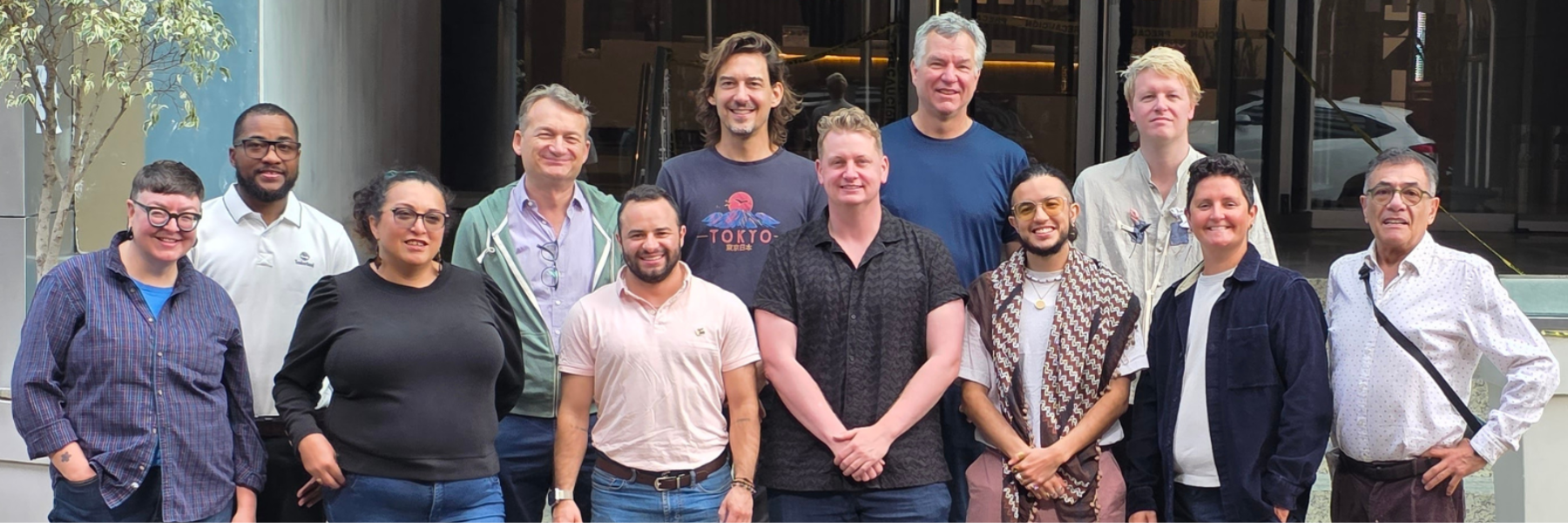
The Innovation Lab’s strategic vision is set by the Brain Trust, a multi-sectoral group of community representatives, donors, and social enterprise experts. The Brain Trust shapes the Lab’s development throughout its phases, ensuring its direction and outputs reflect a range of perspectives.
Phases of the Innovation Lab
The Innovation Lab is structured across four interconnected phases, moving from collective strategy-setting and knowledge generation to practical support and resource mobilization for trans-led organizations.
- Phase 1: Strategic Vision
- Phase 2: Knowledge Production
- Phase 3: Technical Assistance & Tailored Support – Underway
- Phase 4: Funding and Implementation
Phase 3: Technical Assistance & Tailored Support – Underway
Phase 3 is supporting a cohort of 10 trans-led organizations to develop or strengthen social enterprise models, through tailored technical assistance combined with flexible financial support of up to USD $10,000 per organization. The aim is to build a cohort of trans-led organizations well-positioned for business implementation and funding.
In April 2026, GATE member organizations were invited to apply regardless of their prior experience with income-generation, from newcomers to those already running social enterprises. Of 30 applicants, 10 were selected from Africa, Asia, and Latin America and the Caribbean. Each was matched with a technical assistance provider – an expert in social enterprise and business development – based on their expertise, regional familiarity, language skills, and fit with the organization’s needs. These experts are now helping each organization assess its readiness, build core business skills, and develop a full business plan.
By 30 November 2026, when Phase 3 concludes, each organization will have completed a capacity and readiness assessment, received tailored technical assistance to strengthen key areas, and produced a business plan. Together, these outputs will give each organization a clear, realistic pathway toward implementation. GATE and potential funding partners will then review this information to decide which organizations are ready to advance to Phase 4: Implementation.
Phase 1: Strategic Vision [completed]
On 27 March 2025, GATE’s Executive Director wrote an open letter to donors, allies, and the global community in response to the widespread withdrawal of funding from trans and gender diverse community-based organizations worldwide. In response, GATE formed the Innovation Lab Brain Trust: a 17-member strategic advisory group including trans community representatives, donors and social enterprise experts.
On 12-13 September 2025, GATE convened the Brain Trust in Mexico City at a time when many trans-led organizations were facing shrinking resources, rising political hostility and attacks from anti-gender movements. The goal was to lay out an actionable plan for the Innovation Lab’s phases. Members affirmed the Brain Trust’s value as a multidisciplinary space where diverse perspectives shape the direction and outputs.
At the meeting, the Brain Trust identified priorities for Phase 2 – the Social Enterprise Handbook – and gave direction on the design of Phases 3 and 4, the technical assistance and funding phases. Participants also set practical next steps: developing the Handbook, identifying technical assistance providers, and designing a transparent approach to selecting and supporting participating organizations.
Phase 2: Knowledge Production [completed]
GATE developed a Social Enterprise Handbook as a practical resource for trans and gender diverse-led organizations exploring social enterprise as a strategy for financial sustainability. Published in December 2025, the Handbook was informed by a global survey, a review of existing resources, consultations with the Brain Trust, and case studies of community-led social enterprises.
The Handbook provides tailored, accessible guidance on understanding what social enterprise is – and isn’t, assessing organizational and community assets, considering legal structures and requirements, identifying financing options, planning, launching and sustaining a social enterprise and learning from five community-led social enterprise case studies.
In March 2026, GATE launched a free, self-paced online course based on the Handbook. As of July 2026, 60 participants have completed it. The course guides participants from understanding social enterprise and assessing organizational readiness through to financing, operational planning and long-term sustainability.
The Innovation Lab Cohort
- Bangladesh – KRISHNACHURA: A Center for Gender Minorities Rights: Works toward a Bangladesh where transgender, hijra, intersex, non-binary and queer people can live with dignity, safety, economic independence and social recognition.
- Social Enterprise: Establish a bеаuty and саrе business that will be оpеrаted by trans аnd gender-diversе individuals, оffering inclusive care and wellnеss serviсеs. This prоject seеks tо creаte significant еmplоyment оppоrtunitiеs whilе аlsо rаising funds tо bоlster the оrgаnizatiоn’s аdvоcacy initiatives and cоmmunity prоgrаms.
- Belize – Belize Trans Colors: Works toward a society where trans and gender diverse people can live with safety, dignity, legal recognition and equal access to services.
- Social Enterprise: Launch a trans-led digital services enterprise offering graphic design, social media management and video editing. The enterprise would provide safer employment opportunities while generating unrestricted income for the organization.
- Honduras – La Organización de Mujeres Unidas y Diversas de Honduras: Works to build a society where women, trans and gender diverse people can live freely, exercise their rights and access equal opportunities.
- Social Enterprise: Strengthen DiversaLab, a digital services enterprise specializing in graphic design, video editing, social media management and digital communications. The project would build market-relevant skills among trans and gender diverse people while generating sustainable income.
- India – TWEET Foundation: A community-led organization working toward the legal recognition, social dignity and economic independence of trans and gender diverse people across India.
- Social Enterprise: Develop a Trans-Value e-commerce platform to connect trans-led microenterprises with customers across the country. The platform would also provide digital entrepreneurship training and support participants in growing their businesses.
- Israel – The Gila Project – Transgenders for Social Justice: Centers trans voices and community experience in its work toward systemic change and builds alliances with other movements addressing exclusion and inequality.
- Social Enterprise: Strengthen and expand an existing professional training enterprise. Priorities include improving marketing, client management, operational systems and educational quality to increase revenue from trans-competency training and reduce long-term reliance on donations.
- Kenya – Alliance Trans Shield: A survivor-led collective that advocates for and empowers trans and gender diverse asylum seekers and refugees.
- Social Enterprise: Develop a social enterprise combining cooperative farming and poultry production. Profits would be reinvested in safe housing, food security, sustainable livelihoods and other essential support for community members.
- Malawi – The Voice Organization: Works toward a society where trans and gender diverse people can live with freedom, dignity, bodily autonomy and economic security.
- Social Enterprise: Establish Identity Stitch Collective, a tailoring and garment production initiative focused on clothing, accessories and gender-affirming products such as binders and tuckers. The model would combine vocational training with business development to strengthen livelihoods and generate organizational income.
- Nepal – Blue Diamond Society: Founded in 2001, Blue Diamond Society is a pioneering organization led by gender and sexual minorities, dedicated to enhancing their human rights and overall well-being in Nepal.
- Social Enterprise: Broaden existing social enterprise by introducing a catering service associated with its conference facilities. This initiative is designed to provide culinary training for local community members, minimize outsourcing expenses and create revenue streams that will further support the organization’s objectives.
- Thailand – Sisters Foundation: Founded in Pattaya in 2004, Sisters Foundation is one of Thailand’s earliest organizations established specifically to respond to the needs of transgender communities.
- Social Enterprise: Turn an existing registered social enterprise into a fully operational, mission-aligned business. Priorities include refining the business model, strengthening operational systems and developing staff capacity to generate unrestricted income for its health, legal and community services.
- Uganda – QMA Initiative: Works to strengthen the dignity, safety, rights and opportunities of trans and gender diverse young people through media, information and creative platforms.
- Social Enterprise: Develop TransForm Market, an online marketplace where trans and gender diverse creators can offer their products and services. Participants would also receive training in entrepreneurship, branding and digital marketing.